No foolin’ — April is a month for readers and writers

April is one of my favorite months of the year.

Not so much for the weather (which tends to be rainy, windy and generally soggy in north-central Illinois … not to mention all the water that gets in my basement). Despite the crummy half-winter, half-spring season, I look forward to April 1.

If ever a calendar page was meant for readers and writers, April is that page.

Here are some of the literary recognitions celebrated this month:

CAMP NANOWRIMO

This is the little sibling to the main event of NaNoWriMo (National Novel Writing Month, hosted each November). Camp NaNoWriMo allows writers to create a profile, join a “cabin” (essentially a small, focused networking group) of other writers, and set their own word count. In November, all NaNoWriMo participants scramble to meet the goal of 50,000 in 30 days. In April, writers have 30 days to write toward the word count of their choice, be it 10,000 or 30,000 or 100,000.

Dates: April 1-30

To sign up: campnanowrimo.org/sign_in

NATIONAL POETRY MONTH

Do you love reading or writing poetry? This month is all about you! This year, National Poetry Month includes events like the Dear Poet project, which encourages K-12 students to write a letter to one of eight featured poets, and encouraging everyone to celebrate National Poem in Your Pocket Day. If you have a social media account or blog, you can share the love by posting your favorite poems or original poetry.

Dates: April 1-30

To learn more: poets.org/national-poetry-month/home

SCHOOL LIBRARY MONTH

Show some love to school libraries and librarians this month in honor of School Library Month, which the American Library Association launched in order to encourage schools to create activities to help the school and local community celebrate the essential role that strong school library programs play in transforming learning. Be sure to celebrate School Librarian Day on April

Dates: April 1-30

To learn more: ala.org/aasl/slm

D.E.A.R. MONTH/DAY

Remember the days of D.E.A.R. Week in school? (Standing for “Drop Everything And Read”) The day usually is celebrated on April 12, in honor of Beverly Cleary’s birthday — Cleary featured D.E.A.R. in her book “Ramona Quimby, Age 8.” Now, the entire month of April is devoted to D.E.A.R. activities. You can participate in an already-organized activity at a school or library, or host your own event at home by designating a time when everyone in the house has to Drop Everything And Read!

Dates: April 1-30, or April 12

Find out more: dropeverythingandread.com/NationalDEARday.html

INTERNATIONAL CHILDREN’S BOOK DAY

Here’s one that is near and dear to my heart — so dear, in fact, that there will be a special one-day offer for digital readers — check back here tomorrow to find out more.

International Children’s Book Day is celebrated each year on April 2, near Hans Christian Andersen’s birthday, to inspire a love of reading and call attention to children’s book. This year’s theme is “Many cultures, one story.” You can celebrate by reading with the children in your life or taking a nostalgic trip through the pages of your favorite childhood book.

Date: April 2

Find out more: ibby.org/1494.0.html

NATIONAL LIBRARY WEEK

National Library Week is sponsored by the American Library Association and libraries throughout the United States to celebrate the contributions of our nation’s libraries and librarians. The best part? The week also aims to promote library use and support the facilities. All types of libraries — school, public, academic, and special — are encouraged to participate. And so are you — honor your library as simply as checking out materials, making a donation, or attending a library-sponsored event.

Dates: April 12-18

To learn more: ala.org/conferencesevents/celebrationweeks/natlibraryweek

WORLD BOOK AND COPYRIGHT DAY

The United Nations Educational, Scientific and Cultural Organizations honors World Book and Copyright day on April 23 to pay a worldwide tribute to books and authors as well as to encourage everyone — particularly young people — to discover the joy of reading.

Date: April 23

To learn more: un.org/en/events/bookday

WORLD BOOK NIGHT

Talk about a worthy event. The point of World Book Night isn’t to reach out to fellow book lovers — instead, it’s about book lovers reaching out to those who wouldn’t normally read or who don’t have access to books. Each year, World Book Night solicits volunteers to hand out books, then ships a box of books to the volunteer to distribute. Although the call for volunteers to hand out World Book Night’s books is closed for this year, organizers are still accepting volunteers to sign up and hand out their own books — they can be books the volunteer already owns or new books bought especially for the event.

Date: April 23

To volunteer and spread the love: worldbooknight.org/own-book-volunteers
Posted in Reading, Writing | Tagged , , , , , , , | 2 Comments

What to do when you write yourself into a corner

I first heard the advice during NaNoWriMo a few years ago: Always stop writing while you still have ideas so you’ll have a starting point for the next day.

It’s excellent advice. We’re told not to tap the well dry — leave a bit of water today to prevent inspirational drought tomorrow.

Too bad I rarely follow the advice.

My typical routine is to pluck halfheartedly at the keyboard in the early stage of my day’s writing. After a while, I strike a bit of inspiration and write until it fizzles out. Then I snap the laptop closed for the day.

Wash. Rinse. Repeat.

This was my system … until two weeks ago.

I was proofreading a page with advice columns and horoscopes when a light bulb flared.

Horoscopes offer a universal scenario in vague terms, with just enough specifics to make the scenario applicable to any person’s life.

Or … any character’s life.

As I edited the horoscope page, the thought occurred to me: Each day, I write myself into a corner before I close the laptop. I write until I run out of ideas, and the following day I struggle to find the next nugget of inspiration.

Meanwhile, every day, the newspaper offers twelve nuggets of inspiration.

Horoscopes are vague enough that they can easily be incorporated into a novel or story as a starting point for inspiration.

For example, in the Feb. 27 paper:

  • You will be disappointed by someone who reneges on a promise.
  • A preoccupation with professional responsibilities will take its toll on an important relationship. Friction is likely unless you make a focused effort to nurture what you’ve got. Re-evaluate what’s most important to you.
  • Your sense of humor and quick wit will lead to greater popularity. Others will be startled to see how entertaining you can be.
  • You’ll face a minor disagreement. Do your best to keep the peace by making concessions.

These scenarios are universal — they can take a dozen different forms. For instance, a reneged promise can be as simple as a parent saying, “We can’t go to the movies like I promised. I got called in to work to cover for a sick co-worker” or as complex as a spouse breaking a marriage vow.

We can take any of these tidbits and write them into our stories. A room of twenty writers could insert a scenario in twenty different ways to create twenty distinct stories. Even though they share the same vague basis — a broken promise, professional preoccupation, a minor disagreement — they are different scenarios in the end.

That’s the beauty of horoscopes. Just specific enough to offer a starting point. Just vague enough to be universal.

Next time you need inspiration or write yourself into a corner, turn to the horoscopes page in the newspaper and challenge yourself to insert one into your writing. It might be the breakthrough your plot needs.

Posted in Writing | Tagged , | 3 Comments

Buy a book, support the library children’s section renovation

I’ll just leave this here for those who are interested:

Grab your favorite blanket and head to reading event

Children’s author Julie Stroebel Barichello will conduct three reading sessions of her debut chapter book, “Sarah & Katy and the Imagination Blankets,” on Saturday, April 11, at Streator Public Library.

Children are invited to bring their favorite blanket to sit on during reading sessions. At the end of each session, books will be available for purchase at a discounted rate of $5, and Barichello will be on hand to sign copies.

The hourlong sessions will be from 1 to 2 p.m., 2 to 3 p.m. and 3 to 4 p.m. Different passages of the book will be read during each session, so parents and children are welcome to attend one or multiple readings.

Children who attend can enter their name for a chance to win a reading basket featuring Sarah & Katy merchandise. A name will be drawn at the conclusion of the third reading. All children will receive a small gift.

All proceeds raised from book sales will be donated to the library’s renovation of the children’s section, which will cost an estimated $18,000.

The event is hosted by Streator Public Library and the Friends of the Library.

Posted in Reading | 1 Comment

The most important books we’ll ever read

Earlier this month I rated a book with 3 out of 5 stars on Goodreads. When the review auto-posted to Facebook, a friend expressed surprise at the low rating.

I was quick to reply that a 3-star ratings indicate an average book I enjoyed. The philosophy of my rating system is:

  • 5 stars: The book shaped me as a person, changed my outlook or perspective on issue, or expanded my personal philosophy.
  • 4 stars: This is a book I love and want to read more than once.
  • 3 stars: A book I thoroughly enjoyed, although I likely won’t read it a second time. The 3-star tier is my broadest and encompasses a wide range.
  • 2 stars: I didn’t enjoy the book, but it has enough literary/artistic merit to give it more than a 1-star rating.
  • 1 star: I loathed the book and it lacked any redeeming social, literary, or artistic value.

The Facebook conversation about my recent 3-star rating made me wonder, which books had I marked 5 stars on Goodreads? A wave of literary nostalgia washed over me, and I sauntered over to Goodreads to review my shelves.

Only one book has a 1-star review. (For the curious, that would be “Twilight,” by Stephenie Meyer.) There are five 2-star reviews, 27 3-star reviews, 10 4-star reviews, and 18 5-star reviews.

The numbers surprised me. I had expected my 5-star reviews to be the second-lowest number (with 1-star reviews being the lowest). Instead, they’re the second highest.

There is an obvious trend in my 5-star book picks, though.

All are books I read in grade school, junior high, and high school. (Only two were novels read in high school; the other 16 are from my middle school years.)

If this is put in the context of my rating system (that 5-star books are the ones that shaped me as a person, changed my outlook or perspective on issue, or expanded my personal philosophy), then the implication is:

The most formative books in my life were the ones I read in childhood.

That makes sense. In childhood, we are sponges for life experiences. We absorb the emotions and experiences of book characters and internalize those lessons. Through literature, we develop empathy. Seeds of ideas and self-philosophies are planted.

Stories can have an impact at any stage in life, but in the formative years they are especially powerful.

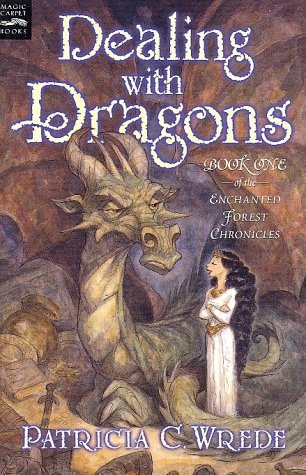
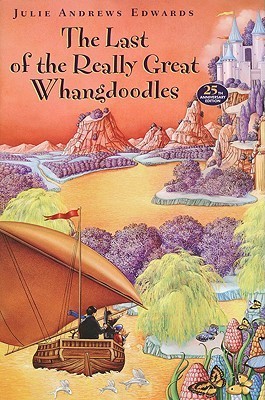
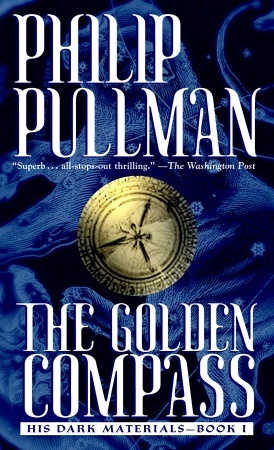
THE LAST OF THE REALLY GREAT WHANGDOODLES and BRIDGE TO TERABITHIA  made me believe in power of imagination. THE GOLDEN COMPASS was one of the earliest books to challenge me morally and religiously — decisions had consequences, and children were not exempt from those consequences. DEALING WITH DRAGONS turned the Disney princess stereotype on its head when I was introduced to Cimorene, who needed no prince to save her.

These are the books that inspired a love of reading, charged my imagination, and offered role models.

The books we read as children are among the most important books we’ll read in our lives.

This is why I take book selections seriously for each birthday and gift-giving holiday. I want to give books that make children want to read more. I want to give books that spark imagination, that make children think, and that challenge them in some small way (be it vocabulary, new ideas, etc).

Sarah’s ninth birthday is coming, and I have spent weeks honing in on the perfect book for her. (For the curious: my choice is Neil Gaiman’s THE GRAVEYARD BOOK.)

The importance and influence of childhood reading reinforces my commitment to writing kid lit. One day, I hope it will be one of my books that sticks with a child through the school years and into adulthood.

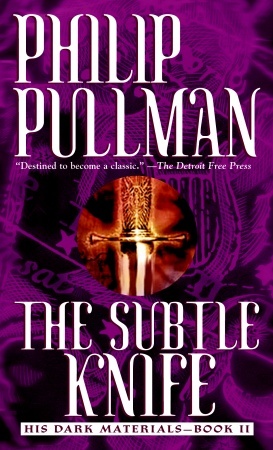
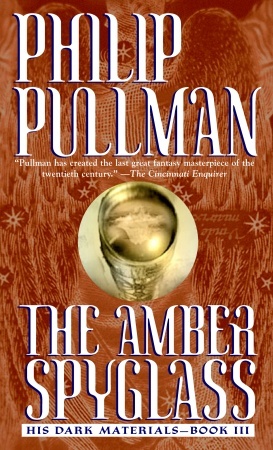
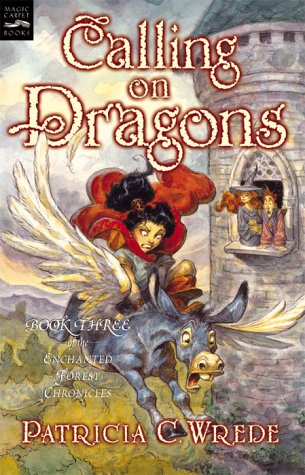
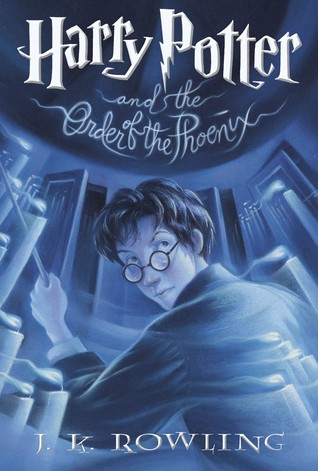
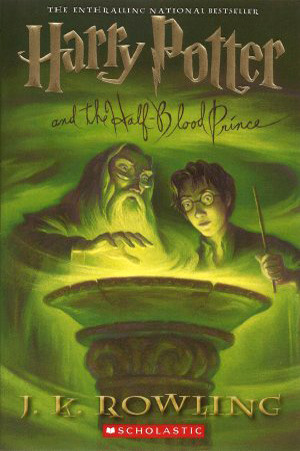
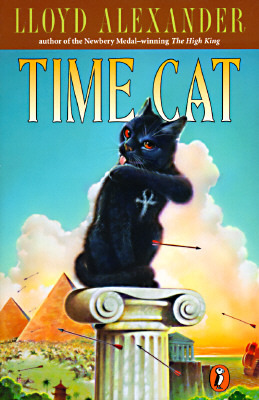
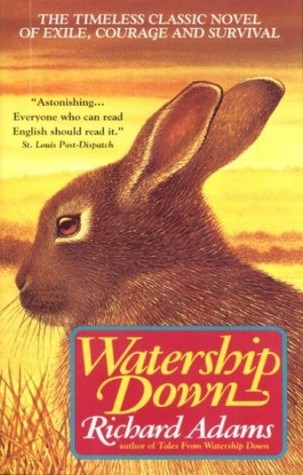
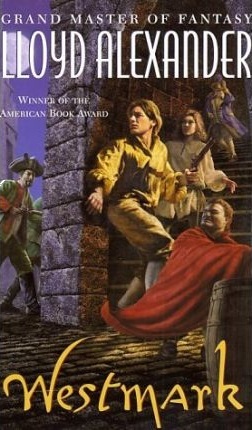
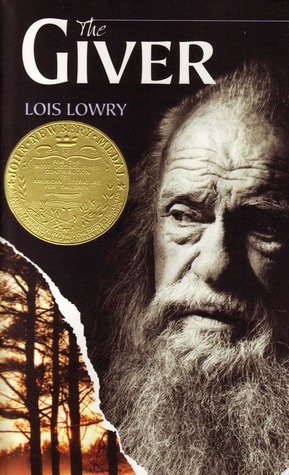
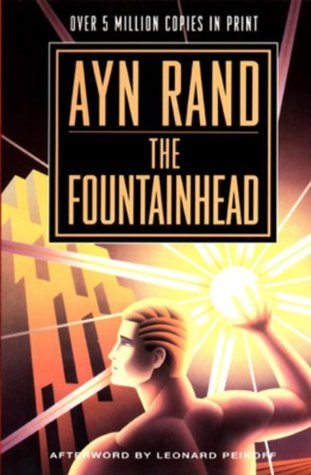
JULIE’S TOP 18 INFLUENTIAL BOOKS FROM CHILDHOOD
(5-star ratings on Goodreads)

Posted in Reading | Tagged , , , , , , , , , | 1 Comment

What you probably don’t know about the books you grew up loving

Who knew there was so much we didn’t know about the books we loved growing up?

For example, do you know what inspired Katherine Paterson to write “Bridge to Terabithia”? How about the 50 words — no more, no fewer — Dr. Seuss used to write “Green Eggs and Ham”? Do you know what happened to all the royalties earned by “Goodnight Moon”? What was the name of the sixth child in early drafts of Roald Dahl’s “Charlie and the Chocolate Factory”? Louis Sachar’s “Holes” wasn’t originally titled “Holes,” either — do you know what it was?

The answers to these tidbits and more are featured in episode 206 of Mental Floss’s List Show, titled “47 Charming Facts About Children’s Books.”

This compilation goes to show that sometimes, the Internet is a wonderful place full of wonderful things. (In this case, full of many fun literary tidbits.)

Posted in Reading | Tagged , , , , , , , , , | 1 Comment