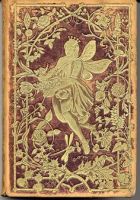
So long, 2015, and thanks for all the fish

Here we are. Day 1 has passed of another new year.

I could try to tally the previous year in a half dozen ways. How many words written. How many books read. How many movies watched. How many friends visited, or miles traveled, or dollars earned.

I could try … but I won’t.

Instead of tallying and quantifying, I’ll settle with saying that all in all, 2015 was a good year. Even so, I’m not sorry to see it go. Not because it had some ruts (because it certainly had a few of those), but because that’s the nature of time. We look back, hold onto the good, try to let go of the bad, and look forward the future.

So long, 2015. And thanks for all the fish.

(Sorry … I couldn’t resist a “Hitchhiker’s Guide to the Galaxy” reference.)

As for 2016 … let’s make it a good one, shall we?

A LOOK AHEAD AT 2016

The best part of a new year is that it’s like a blank page.

Ever since I was a kid, I’ve savored the moment of putting a pen to a blank notebook or journal for the first time. The start of a new year feels the same. There is a wide open  year ahead that hasn’t been filled yet. It’s empty, and I can fill it however I please.

It’s up to me if I want to write a sonnet or simply scribble on a blank page. Likewise, it’s up to me how I spend my year.

Who wants to waste pages on scribbles when they can turn into stories or art? I don’t plan on wasting my days this year. In fact, I have high hopes and big plans for this year.

Family. The husband and I hope this is the year we expand our little household of two into a household of three. I need someone around the house to share my expanding kid lit collection with. Luckily the husband is already on board with  (EDIT: Webster is glaring at me from the ottoman. I think he’s offended that I didn’t say we hope to expand our little household of three into a household of four.)

Home. Remember my dream house? We’re hoping the stars (and finances) align so we can buy it this year. (Or at least buy a house of our own, even if it isn’t the dream house.)

Writing. I’ve been itching for a year to start writing “The Mountain of Dempsey Molehill.” This year’s the year. I’ve even booked the first week of April as vacation time so I can take advantage of Camp NaNoWriMo. If all goes to plan, I’ll have a complete draft by June. Since it probably won’t go to plan, I’ll set a backup deadline of having a complete draft by next January.

Reading. I think I have a husband and a cat in this house, somewhere. I just can’t see them around my to-read piles. Here’s to another year of meeting some new favorite books, and rereading one or two old favorites.

Posted in Writing | Tagged , , | Leave a comment

Liebster Award nomination; invitation to bloggers

Throughout the day Tuesday, the stats for my blog’s hits were climbing at an unusual pace. I recently shared a couple posts over at the Kid Lit Blog Hop, but the rapid increase from my usual numbers seemed to have a different source.

That’s when I realized cindyscreativecorner nominated me for a Liebster Award. (Thanks for including me in this blog discovery trail, Cynthia!)

liebster2

Liebster Award Rules

  1. Thank the person who nominated you and link back to their blog.
  2. Display the Liebster Award on your blog.
  3. Share 11 random facts about yourself.
  4. Answer the 11 questions you were asked
  5. Nominate 11 bloggers with less than 200 followers for the award and have them answer 11 questions.
  6. Let the other bloggers know you’ve nominated them.
  7. Copy the rules into your post.

Eleven Random Facts About Me

  1. My cat’s full name is Webster Oxford Roget Derek Stroebel. (Webster and Oxford for the dictionaries, Roget for the thesaurus, Derek for my journalist husband, and Stroebel for my maiden name.) His initials spell WORDS.
  2. I accidentally became a children’s author. Growing up, I meant to write for adults.
  3. Despite my sister thinking they’re cute, I think octopuses are terrifying.
  4. Pink Starbursts, Nerds, and SweetTarts are my favorite.
  5. I never saw a mountain until I was 26 years old.
  6. One of my dearest friends thinks my middle name is Anne. It isn’t … and he’s believed it for so long that it feels awkward to correct him at this point. (By the way … if you’re reading this … sorry!)
  7. I find it satisfactory to peel things … stickers, bananas, paint. Especially when they peel smoothly and in one piece. (I have a terrible habit of peeling my nails instead of trimming them. People think I bite them, but I pick at them and peel.)
  8. My maiden name (Stroebel) means “bushy or bristly hair,” or “son of Strubo.” (I guess I know which side of the family I inherited my frizz from. Thanks, Strubo.)
  9. Some of my favorite scents: vanilla, gasoline, pencil shavings, Sharpie markers
  10. I’ve read only two books on an e-reader.
  11. Four times a year I design a regional travel magazine.

Eleven Questions for Me to Answer

  1. What do you love about blogging? Spreading a love of children’s literature and literacy
  2. Name something you like about yourself. I’m a dreamer.
  3. What do you like to do in your spare time aside from blogging? Writing, reading, and spending time with family are favorite pastimes. I also enjoy cooking, going for walks, and research. Webinars are a big part of my life.
  4. The name of the person who influenced you most. Two influencers stand out: My high school photography teacher is 90 percent of the reason I went to college; and in college I met Angie Barry, a brilliant writer whose commitment to the craft constantly inspires me to stay on task and write.
  5. What frightens you? Octopuses! (See No. 3 in the previous segment)
  6. Name two favourite books. “The Last of the Really Great Whangdoodles” and “The Golden Compass”
  7. Favourite movie. I’ve never had one. Although lately, I’ve been particularly fond of “Inside Out” and “Wreck-It Ralph”
  8. Bike, Bus, or Car? I’m a car person. Mostly because I live in rural Illinois, where most towns have small populations and are 10+ miles apart. I don’t have the patience or stamina to ride a bike those distances. (Although I wish we had public buses around here — being a passenger means I could read during commutes!)
  9. What language/languages do you speak? English, with reading/writing proficiency in Spanish
  10. What places have you visited? Most recently, I’ve been to Colorado, New York, Minnesota and Ohio.
  11. What do you want to be remembered for? Advocacy of literature and literacy

Eleven questions for my nominees

  1. E-readers or print editions?
  2. Share a memory about your childhood.
  3. What is the most meaningful object you own?
  4. How would you describe yourself in one sentence?
  5. How would you describe your closest friend in one sentence?
  6. What was your favorite book growing up?
  7. And what is your favorite book now?
  8. What is one thing you hope to accomplish during your life?
  9. What is the kindest deed you’ve ever witnessed?
  10. Tell a joke.
  11. What gives your life meaning?

The blogs I am nominating

The majority of bloggers I know and/or follow have more than the 200 limit required for the Liebster Award. I don’t want to see the trail run cold at my blog, so I’m going to bend the rules and leave an open invitation to bloggers interested in networking. Feel free to consider yourself nominated if you have fewer than 200 followers and want to join the Liebster Award network through me. The eleven questions I shared above can be used as a starting point for your own Liebster nominations.

As I encounter other bloggers who fit the Liebster criteria, I also will update the post with links to their blog and a nomination.

Posted in Writing | Tagged , , | Leave a comment

Kid lit isn’t just for kids

The name of the genre might be deceiving, but the truth is, kid lit isn’t just for kids.

There are those who disagree (Ruth Graham outraged half the Internet in 2014 when she said adults should be embarrassed to read YA fiction). But the reality is, literature aimed toward children is still literature. Worthwhile literature.

The only difference is that kid lit includes an expanded audience. (You guessed it: Kids.)

Last night while doing dishes, I listened to another free online lecture from David Beagley, a university lecturer in children’s literature and literacy. (I typically despise doing dishes; I’ve found the task much more bearable when listening and learning.) During the talk, Beagley emphasizes the fact children’s literature may have a simpler vocabulary, but the ideas and emotions still resonate across all age groups.

This week I’ve been reading “The Complete Grimm’s Fairy Tales,” which on the surface seems like it’s as far from adult reading as one can get. But the reviews on the back cover dispute that idea:

  • “Among the few indispensable, common-property books upon which Western culture can be founded. … It will be a mistake if this volume is merely bought for a child; it should be, first and foremost, an educational ‘must’ for adults.” — W.H. Auden, The New York Times
  • “Everyone should possess and know Grimm’s Fairy Tales — one of the great books of the world.” — Richard Adams, The New York Times Book Review

Those words are high praise and urge adults to read stories that traditionally are set aside as children’s reading fodder.

Kid lit may not be as challenging for an adult reader, but it still has plenty to offer. Middle grade and YA novels especially are breeding grounds for discussion. Show me a reader who despises the idea of adults reading kid lit, and I’ll say, “This is a reader who doesn’t understand children’s literature.”

Many adults underestimate the child as a reader. Children are capable of grasping complex ideas and emotions. They are capable of relating to those ideas. Kid lit is full of universal themes that are relevant to readers of all ages. The only difference is, the entry level of the vocabulary and plot is open to younger age groups. You won’t find PG-13 or R material in the story, but you likely won’t find trivialized fluff, either.

Most kid lit offers two levels of reading experience: the experience for the child, and the experience for the parent. Beagley touched on this in his lecture as well. He drew a comparison to the movie “Shrek.” By and large, the animated feature is considered a children’s movie. But adults love it, too. There are two levels of humor in it, some of it aimed at adults and other bits aimed at children. The two age groups laugh at different jokes in “Shrek,” but both groups enjoy the film.

In an interview in the February 2016 issue of Writer’s Digest, Drew Daywalt (author of “The Day the Crayons Quit”) addresses how his book is enjoyed by both parents and children. He says:

We delineate between childhood and adulthood too much. If you entertain yourself [as a writer] and you’re honest about it, and it’s appropriate humor for a child. … So I guess I write for adults and I write for kids, but only incidentally, because I’m writing for myself.

I can relate, as both a reader and a writer. About half of my readers are adults for the Sarah & Katy books. I didn’t intentionally write for adults — my first goal was to write a story Sarah and Katy would enjoy; my second goal was to tell a story I would enjoy writing. (Two of my favorite characters to write were Ruddy and the Glomtom — incidentally, those are most readers’ favorite characters as well.)

As a reader of kid lit, I’m reminded of the Sandra Cisneros story “Eleven.” (I highly recommend it — you can read it here or here.) In the story, the protagonist observes on her eleventh birthday that she is eleven, but she’s also ten, and nine, and eight, and every age she’s ever been. All those years and ages and the memories/feelings/reactions associated with them are still locked up inside her.

Reading kid lit feeds those ages inside me. When I read Gary Paulsen or Lois Lowry or Richard Peck, my inner preteen steps forward. When I read Donna Tartt or Stacy Schiff, I read as an adult.

Books targeted to any age group can resonate with a reader when they’ve been those age groups. It’s hard for young readers to move ahead of their vocabulary or life experience level, but adult readers are more than capable of sliding back and forth among multiple levels of literature.

And they should. Because there are so many gems among kid lit.

Posted in Reading | Tagged , , , , , | 2 Comments

The Bookish Christmas: Kid lit edition

When I encountered The Bookish Christmas tag at Scifi and Scary Book Reviews (*the tag was created by callummclaughlin.wordpress.com), I couldn’t resist jumping into the bookish fun. Without further ado, here is my bookish Christmas list.

Father Christmas: Name a book you received as a child that you treasure to this day.

“The Last of the Really Great Whangdoodles” by Julie Andrews Edwards. This book was given to me for a holiday (I can’t recall which … Christmas, birthday, maybe Easter) and ran away with my imagination. The characters learn to travel to magical Whangdoodleland using only their imaginations. With some influence from the book, my imagination turned our backyard into a similar magical kingdom.

The ghost of Christmas past: Is there a book or series you like to revisit each year at Christmastime?

I don’t have any regulars that I return to each year. (I’m too busy piling new titles onto my Christmas list; this year I’m angling for the complete works of Shel Silverstein.)

Christmas tree: Name a series that reaches new heights with every entry.

His Dark Materials by Philip Pullman: This series was the first to make me analyze accepted truths about myself, my faith, and the world around me. It also ran away with my imagination (that cliffhanger where Lyra sets off for the city in the sky!) and my emotions (the scene in the third book when Lyra and Pan get separated … my heart ached all day).

Friends and family: Name a book with fantastic characters.

The Enchanted Forest Chronicles. (Technically that’s four books, but who’s counting?) The names alone are memorable: Cimorene, Kazul, Mendanbar, Zemenar, Telemain. Cimorene is especially memorable to me because she was the first princess to turn the “damsel in distress” formula upside down for me. The first book opens with Cimorene running away from home to be a dragon’s princess. Most dragons had to go to the effort of kidnapping their princesses, but Cimorene volunteered for the job of being a dragon’s personal housekeeper. The books don’t shy away from turning gender roles on their heads, either. Kazul may be a female dragon, but she gets crowned King of the Dragons.

CustomBookCoverDecorations: Name a book with a gorgeous cover you would proudly display on your shelves.
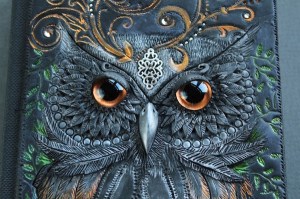
Any of these handcrafted book covers by Latvian designer Aniko Kolesnikova. Imagine if someone wrote a book of original fairy tales and Kolesnikova designed the cover. Forget mass market paperbacks — I would love to display a one-of-a-kind book like this on my shelf. (Although there are plenty of mass market paperbacks I’d be happy to add to my shelves, too.)

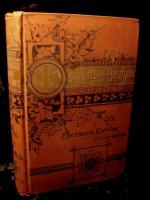
I’m also a sucker for any antique-looking fairy tale cover. One day I’ll have a home library lined with dusty smelling volumes that look like this:

FairyTales1 FairyTales2 FairyTales3

Christmas cards: Name a book that carries a great message.

“Bridge to Terabithia.” Friendship and imagination. Those are two of the most important elements as we grow up. Friendship and imagination both shape us and lead us to self-discovery.

Ice and snow: Name a book that you were hoping to love but which ultimately left you feeling cold.

“Hatchet.” This Newbery award-winner was published the year I was born, and by the time I was in elementary/middle school, my teachers couldn’t get enough of it. My class was assigned to read it, and it’s one of the only assigned books that bored me to the point of skimming chapters. (I couldn’t bring myself to skip chapters completely.) Brian’s trials in the book were interesting, and certainly realistic. (It was one of the first books to address a character’s need for bowel movements.) But the plot never hooked me. At risk of gender stereotyping, the reason may be that the book was too “boyish”; I loved the survival story in “Julie of the Wolves.” Maybe male leads don’t resonate as strongly enough with me.

Christmas lunch: Name a book that was big and intimidating but oh so worth it in the end.

I don’t think I’ve ever been intimidated by a book’s size. Although I vaguely remember being intimidated by the small font size of “Where the Red Fern Grows” in fourth grade. That book was very much worth the eye strain, though. It became one of my favorites as a kid — I read it every summer in elementary and middle school.

Mince pies: Name a book you found sweet and satisfying.

“A Long Way from Chicago” by Richard Peck. Grandma Dowdel can be gruff, but she’s also endearing. And the end of the book is sweet without leaving a sickly syrupy aftertaste in your mouth.

Presents: What book do you wish you could give everyone to read?

“The Last of the Really Great Whangdoodles.” Oh wait, have I mentioned that one already? It’s worth mentioning again. It’s that good.

Posted in Reading | Tagged , , , , , , | 6 Comments

Disney and Pixar, please stop killing parents

Last night, the hubby and I watched Disney and Pixar’s latest collaboration, “The Good Dinosaur.”

When I first saw previews for the film, I wasn’t overly eager to see it. But last night was a humdrum evening and we decided to drive up to the theater. I was in the mood for popcorn and soda.

The movie was better than I anticipated. I genuinely laughed at several parts. (The hubby is still shaking his head over how much I laughed at the cowboy T-rexes. Seriously, though … you try watching a T-rex shout, “Hyah!” and gallop away like he’s riding a horse when he’s actually just galloping like kids do when they ride stick horses. I don’t know how he was stoic enough to only smile and not break into fits of giggles.)

The plot had a decent (if slightly heavy handed) message, too, about overcoming fear and making a mark on the world. The “make your mark” conversation put me strongly in mind of Peter H. Reynolds’ children’s book “The Dot.” If I had children, I would host a home viewing of “The Good Dinosaur” to correspond with International Dot Day.

GDTrex

A galloping T-rex herding cattle!

I also like that the villains of the film weren’t the T-rexes. (After all, it would be harder to laugh at their galloping if they tried to eat Arlo, the main character. I’d have to assume an appropriately outraged expression whenever they came on screen.) A different breed of dinosaur turned out to be the bad guys.

But the movie had one sticking point for me. Early in the film, Arlo and his dad chase after a “critter” (a.k.a. a dog-like human eventually christened Spot). When a storm hits, Arlo’s dad is swept away when the river breaks its banks, and he dies. Within about another 15 minutes of storytelling (maybe even less), the critter returns to Arlo’s family farm. He tries to chase the critter off, only to fall into the river and be swept away.

Why didn’t Arlo just get swept away while he and his father were chasing the critter instead of killing off his dad?

GDarlopoppa

Arlo and his dad

There was no real need in the plot to kill Arlo’s father. It would have made plenty of sense to have Arlo get swept away while he and his dad were in the woods. The rest of the movie is about Arlo trying to get home and bonding with Spot on the journey. At the end of the movie (spoiler alert!), Arlo makes it home and runs to his mother. Why not have him make it home and run to both parents?

There’s a scene near the end in which Arlo dreams/hallucinates his dad is with him. Then he realizes it’s not real. That still could’ve worked with Dad being alive. Arlo could think he’s been found and is safe with his father, only to realize it’s a false sense of security. It actually makes more sense to do that if the father’s alive. Why would Arlo think his father’s really there if he’s dead and buried back at the family farm?

Disney has a long history of killing off parents (or simply never explaining where they are — where is Andy’s dad in the Toy Story films?). Can’t all movies be like “The Incredibles,” with both parents alive and raising their children?

Yes, yes, I know The Atlantic offered an explanation about why cartoon mothers are often absent. The reasoning is likely on target, too.

But in “The Good Dinosaur,” it just doesn’t make sense. Arlo still could’ve been swept away, had his adventure, and made it home safe and sound to both parents.

All in all, though, it’s a good film. Judging by the gales of laughter from the kids in the theater, it’s especially a hit for young viewers.

Posted in Children and Family | Tagged , , , , , | 1 Comment