Meet the Molehills: Sneak peek behind the book cover

Molehill starts with M. And mischief starts with Molehills.

The Molehills will be arriving on bookshelves this summer in “The Mountain of Dempsey Molehill.” But just who is the Molehill family?

Get a sneak peek of who you’ll meet between the book covers.

Dempsey Molehill

Dempsey is smack dab in the middle of five children. As much as he wants to be considered one of the “older kids” with his older brother, Brom, and older sister, Tilly, he has a knack for getting into mischief with younger siblings Penn and Bandi.

Dempsey shares the story of a year in his family’s life when his dad runs for mayor. Try as they might to stay on their best behavior, the Molehill gang can’t help causing chaos.

_____

Penn Molehill

Penn is Dempsey’s younger brother and the fourth of the Molehill children. He’s a bit shy, and sometimes Dempsey thinks he’s a pest, but he’s always ready to follow his big brother’s lead … even when it leads to a backyard snowmageddon or scandalizing the elderly women of the Pickettstown Rosary Society. As sweet as Penn can be, he shouldn’t be underestimated. Sometimes nice guys really do win.

_____

Bandi Molehill

Her birth certificate says Bandi. Her mom says her name was meant to be Brandi, but her dad jokes it was supposed to be Bandit … which is more accurate. At six years old, Bandi is a wildcat of a kindergartner. No pair of shoes will stay on her feet. No brush will make it through her tangles. And no one better mess with the light of her life: her cranky one-eared cat, Scrap. Bandi’s love for animals and disregard for rules has a way of getting her into scrapes — and Dempsey usually has to get her out of them.

_____

Tilly Molehill

As the second-oldest Molehill sibling, Tilly is straight-laced and responsible … and exasperated with the younger trio’s knack for trouble. Dempsey thinks she’s just boring “Frilly Tilly” now that she’s in high school (after all, who wants a big sister who cares about cooking and boys instead of fun and games?), but even the most reliable Molehills have a trick or two up their sleeves now and then.

_____

Brom Molehill

The eldest Molehill sibling is practically a grownup — at nineteen years old, he still lives at home, but he can’t be bothered with wrangling the rest of the gang.

Between shifts at the local hardware store, Brom is left in charge of the siblings. His only rules are don’t break any bones or commit any crimes. But his babysitting style has a way of leaving the door open for a lot of havoc…

_____

Harwood Molehill

Harwood Molehill is the father of the five Molehill kids. He’s a gentle, fair-minded person who can’t stand to see anyone’s individuality be crushed. When neighborhood friend Bo Jasper isn’t allowed to paint his house green, Harwood decides to run for mayor against longtime Mayor Jim Picketts. But his fight to change the rules so Bo can get his green house is an uphill battle … especially when his family can’t seem to stay out of the newspaper for their hijinks.

_____

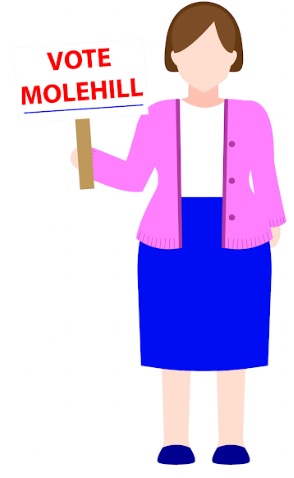
Susan Molehill

Dempsey’s mom is the glue that keeps the Molehill household together. She’s Harwood’s number one supporter on the campaign trail and works hard to put the best Molehill foot forward.

Susan has her work cut out for her with this group, but she loves her family and will stand by them through any situation.

_____

“The Mountain of Dempsey Molehill” is a middle grade novel about a big family, major mischief, and standing up for each other. If Jeanne Birdsall’s “The Penderwicks” children were raised by Richard Peck’s Grandma Dowdel (“A Long Way from Chicago”), you’d get the Molehill kids.

[Big thanks to Hannah Jones Illustration for the character illustrations. Watch for more updates on “The Mountain of Dempsey Molehill,” including a cover release in the coming months!]

Posted in Writing | Tagged , , , , | Leave a comment

Rebranding future books under a new imprint

The past three years have been devoted to work on The Mountain of Dempsey Molehill. First writing it, then rewriting … and rewriting … and editing … and rewriting … and editing … and …

You get the picture.

But there has been more going on behind the scenes than just novel writing. In between rounds of editing and revising, I had to make an important decision about the next step: Do I pitch the manuscript to an agent in pursuit of traditional publishing, or do I continue on my path of independent publishing?

Even as I asked myself the question, I knew the answer deep down. I was already making plans to hire an artist for cover art, and renewing my Adobe Creative Cloud subscription for layout, and mentally logging design elements I liked in other middle grade novels. I began planning a release date and jotting marketing campaign notes on slips of paper that I later misplaced.

As much as I love the writing process as an author, I equally love — or dare I say, moreso love? — the production process of designing and crafting a book. That is just as much an art as writing, and one I find immensely satisfying.

My first foray into independent publishing was with Sarah & Katy and the Imagination Blankets, which I published through CreateSpace. As I waded into the self-publishing industry for the first time, I didn’t immediately register my own imprint. However, for Sarah & Katy and the Book of Blank, I created JSB Independent Books.

Why I’m changing the name

JSB Independent Books was a brand that didn’t have a lot of thought or meaning behind it — I simply created it so the publisher wouldn’t be listed as CreateSpace, which serves only as the print-on-demand service and not as the publisher or copyright holder. The name of the imprint was derived from my initials — Julie Stroebel Barichello.

When I made the choice to continue independent publishing with The Mountain of Dempsey Molehill, I decided it was also time to seriously consider branding a new personal imprint for future projects. While JSB Independent Books wasn’t a terrible banner to fly over my work, it also wasn’t strong. I discovered my typewriter key logo looked uncomfortably similar to Little, Brown and Company’s logo. The initials JSB also aren’t unique in the literary world. A Chicago-based author and illustrator publishes under the name JSB. Then there’s author James Scott Bell, who writes books on writing and has a page on his website named JSB’s Books on Writing. There’s author J.S.B. Morse. And let’s not overlook the wholesale book dealer JSB Books LLC in Arkansas.

The market feels a little congested with fellow JSBs. That led to several weeks of searching for an idea for a new imprint name. One that reflected myself as a writer and my work.

Inspiration for the new imprint

As a middle grade author, I searched my mental archive of my own middle grade years, searching for a piece of inspiration. Something that summarized my grade school and junior high life. What element of my youth could be a unique publishing name? What could encapsulate who I am as a writer? What was I interested in back then? Who was I back then?

The answer to that last question is remarkably obvious. I was a Stroebel.

That one word — that past identity — took root in my mind. Even though there are several authors with the surname Stroebel (and the alternative spelling Strobel), a quick Google search didn’t find any publishing companies with a similar name. And Stroebel summarizes so much my childhood self. There were other Julies in my school, but the only Stroebels were my sisters and me. I took pride in being called by my surname and the derivative nickname Strobes.

I’ve also taken care to incorporate Stroebel into my writing career — as a young writer, I imagined seeing Julie Stroebel on the cover of a book. Hence the reason why I have a mouthful of an author name; I wanted to honor both my maiden and married surnames, so I used them both as my author identity for the Sarah & Katy books.

My earliest identity as a writer is now the inspiration of my newly formed imprint: Stroebel Independent Books.

Q. Will Stroebel stay in your author name?

A.
I’m still trying to decide on that one. While I like the consistency of keeping the same author name I used for the Sarah & Katy books, the name Julie Stroebel Barichello is a mouthful for young readers. I’ve considered moving forward with separating Stroebel as my publishing branding and Barichello as my author name.

Beyond the name

Once I settled on a name for my imprint, I had another element to consider: a logo.

The visual aspect was harder to pin down than a name. What sort of image would illustrate the name Stroebel? Even though the product I’m selling is a book, I didn’t necessarily want to incorporate a book into my logo. So I wracked my brain for a visual element that could tie into being a Stroebel.

It took a while for the next lightning bolt of inspiration to zap my brain.

One of the reasons I was determined to incorporate Stroebel into my publishing life is to carry forward my family’s legacy. With three daughters, my dad’s line of the Stroebel surname ends at his branch of the family tree. So even though I’m legally a Barichello these days, I would keep the name alive for one more generation in our branch.

It occurred to me as I focused on the Stroebel part of my identity that I was overlooking my mom’s side of the family. Just as I parted with Stroebel to become a Barichello, she parted with Haislip to become a Stroebel.

But I’m equal parts Stroebel and Haislip blood. So I started hunting for ways to incorporate Haislip into my publishing branding.

Thankfully, Haislip offers a bit more pleasing visual element than Stroebel. The only definition I could find for the Stroebel surname was “person with bushy or bristly hair; son of Strubo.” That doesn’t inspire elegant logo art. But Haislip — meaning “dwellers of hazel valley”– offered an idea: a hazel leaf.

Thus, I introduce my new imprint name and logo.

Posted in Writing | Tagged , , | 1 Comment

An update from La Casa Barichello

For the past six months (give or take a few weeks), I’ve been mostly silent on the blog and social media.

I haven’t been ignoring them, per se. There’s been a voice nagging in the back of my mind at least once a week: “You need to refresh your content. You need to connect with people.”

Then my inner hermit replies, “Welllll, I’ll just finish reading this book … or whole stack of books … before I log online.”

My pepper plants are a metaphor for my online presence … shriveled by neglect.

The good news is, my inner hermit helped me reach my Goodreads goal last year. The bad news is, I let my sites go a little dry. Sort of like every plant I’ve ever tried to nurture in my house. The bell peppers in my container garden can attest to that.

That doesn’t mean it hasn’t been a productive six months. Even though I haven’t done much writing online, there’s been a lot of progress offline.

Two complete drafts of The Mountain of Dempsey Molehill have gone through edits. A third read-through is underway, then the manuscript will be handed off to beta readers. A projected release of August 2019 is in the works. I’ve been exploring printing options, and I’m excited at the prospect of releasing Dempsey as my first hardcover novel.

Also, the ever-incredible Hannah Jones is collaborating with me again and provided stellar artwork for the cover. A cover reveal is on the horizon.

And, as always, my faithful writing companion keeps me company when my hermit mode activates. Webster does a good job at silently judging me and reminding me I should be writing. So you can thank him when the next book comes out.

Webster says, “It’s time to be writing.”
2 Comments

The Laura Ingalls Wilder Award name change is OK … and so is liking her books

This past weekend, the Association for Library Service to Children made a change to a major children’s award.

“Little House on the Prairie” author Laura Ingalls Wilder has long been the namesake of the Laura Ingalls Wilder Award, which earned its name after it was first presented to her in 1954 to honor outstanding children’s literature in the United States.

More than six decades later, the award will henceforth be known as the Children’s Literature Legacy Award.

The reason for the name change is stereotypical and racist depictions of Native American and black individuals in Wilder’s series, which the ALSC has previously said is not “consistent with the intention of the award named for her.”

The change has sparked a variety of reaction among children’s literature readers and writers. A sampling of voices from the Twitterverse give a micro-glimpse of how folks are feeling:


You get the idea.

I think there are two angles to this issue that are important to keep in mind:

  1. Renaming the award is OK. There’s nothing wrong with acknowledging a societal shift in values and updating symbols of those values (in this case, the name of the award) to reflect the modern conscience. The name change isn’t about disrespecting Laura Ingalls Wilder; it’s about respecting indigenous and black Americans.
  2. It’s also OK to still read and appreciate the “Little House” books. They are a reflection of the attitudes of their time and of our history — positive and negative elements alike. There’s no hiding from or sanitizing the distasteful parts of our history; there’s just a responsibility upon parents, teachers, and librarians to impress context upon young readers and guide them in discerning shifting values.

The Association for Library Service to Children isn’t stripping Wilder of her award — she remains the first recipient. Instead, it’s making an effort to give the award a name that is more inclusive and reflective of its current values. Wilder remains among the ranks of honored writers, and her contributions to children’s literature are not being disavowed.

Wilder is part of the American literary legacy. At the core of the issue is that her body of work is no longer reflective of all of the values of children’s literature, so the association opted for a name more specific to the goals of the award.

Posted in children's literature, Reading | Tagged , , , , | 5 Comments

What if life skills weren’t electives?

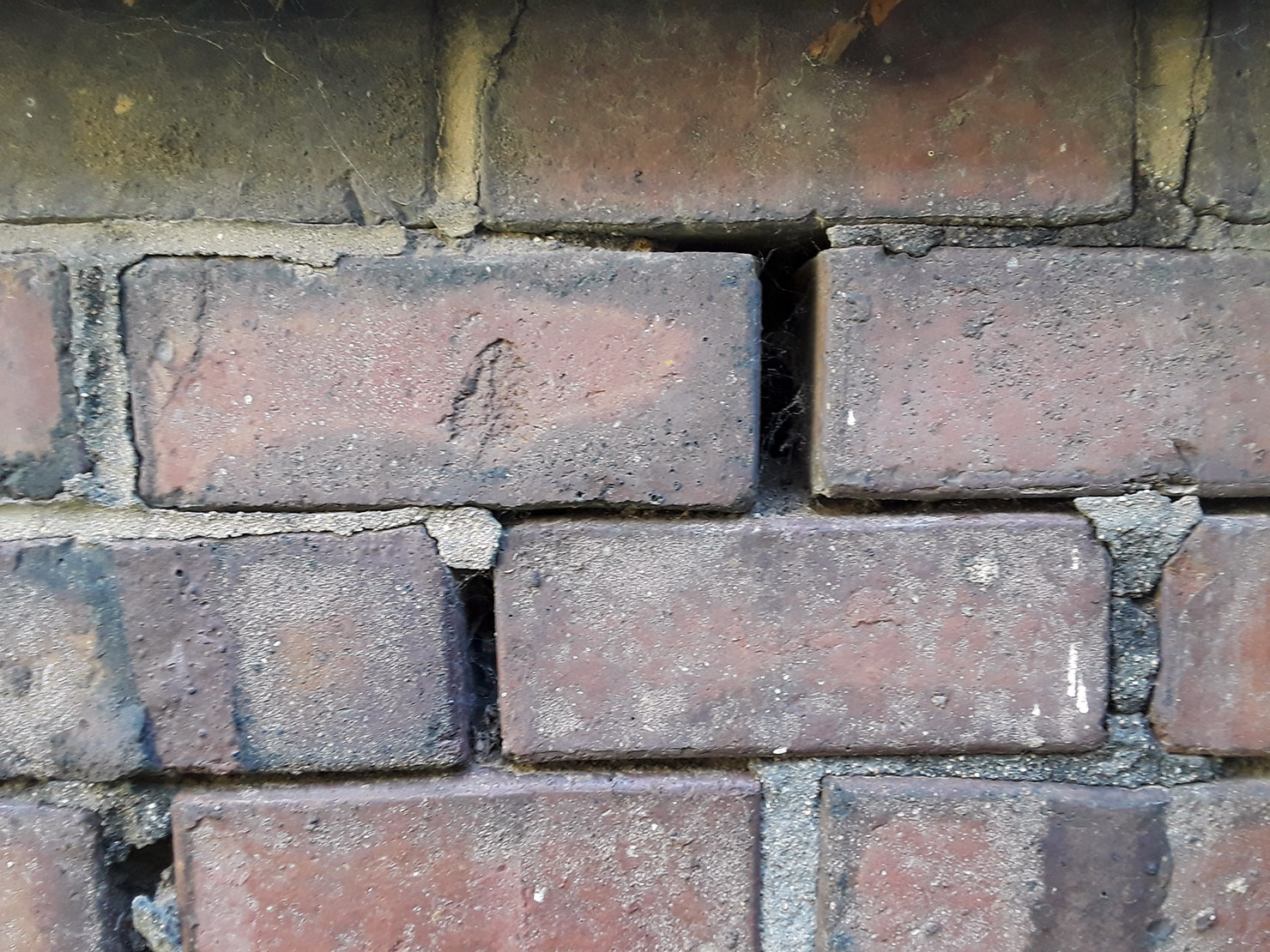
I walked around my brick foundation today, poking my fingers through the gaps in the mortar. My heart weighed heavy in my chest, my stomach twisting and threatening to squeeze the tamales I had for lunch back up my throat.

It was clear the foundation hasn’t been repaired in years. My fingers found spots where they could reach almost all the way through to the basement. My nail could scrape away the aged mortar.

My mind looped over the same thought, over and over: Where will we find the money for this big of a project?
20180613_151912

I Googled episodes of “This Old House” to learn how to tuckpoint. The process looks relatively manageable, albeit time consuming: Scrape away the old mortar about 1 inch deep. Apply new mortar.

Except there are rules. Like: Don’t use mortar harder than your bricks, because the bricks need to be able to expand and contract with the temperature.

How do I know how hard my bricks are? I wondered. How do I know how hard the mortar is?

The fantasy of being a Google-taught do-it-yourselfer on this project faded quickly. A foundation is too important to risk ruining. So I called Dad, the ever-present expert and giver of advice, to plan my next steps in taking out a loan and finding the right contractor to do the work.


WHEN I WAS in high school, there were plenty of life skills and trades classes. Home economics, early child development, wood shop, agriculture, building trades, architectural drawing, computer-aided drafting, electronics, auto shop …

My husband’s high school 25 miles away had additional trades education, such as welding.

All of those were electives, though. Between English, math, and science requirements, I filled my elective slots with art, theater, creative writing, and foreign language.

I don’t regret any of those courses. Nor do I regret my college courses in sociology, philosophy, foreign language, communication, photography … but I do regret not working in a few other skills.

At 15 years old, it’s hard to visualize life 15 years down the road. When I was choosing classes for my sophomore year of high school, I wanted to sign up for the things I was interested in right now. Like art and writing. I had no interest in getting greasy in the auto shop or dusty in the wood shop or sweaty in the building trades class.

At 31 years old, I sure wish I’d replaced one art class here with basic auto shop there, and maybe swapped out a semester of theater with a semester of home economics. (Try as I might, I still can’t figure out to thread my sewing machine.)

There were two life skills classes that weren’t electives: computer skills and consumer economics. In computer skills, we learned typing, resume building, and writing cover letters. In consumer economics, we learned the basics of balancing a checkbook and basic money management.

Both classes trained in skills I’ve used daily post-high school.

But there are a lot of other skills — like changing my oil — that I didn’t learn. And I wish I had.


GROWING UP, Dad did all the maintenance around the house. He is an Eric of All Trades, Master of Most. Building a shed, rewiring the house, pouring concrete patios, foundation repair, tree trimming, sump pump installation, car oil changes and tire repair … you name it. He did it, no Google instructions required.

I never worried about learning to repair things myself. In the back of my mind, I simply accepted that there’s always someone around home to do it.

Except in my generation, that’s not typically the case. Now that I’m no longer living with my parents and head a household with my husband, who’s around to do those big and oh-so-necessary projects?

Our house is an ode to literature and music. Every room in the house — kitchen included — has books. There’s a magazine rack in the living room and a newspaper stand upstairs in the office with back issues of our most coveted periodicals. Our entertainment room — which is quickly becoming my husband’s “cave” — is home to his prized turntable, sound system, and vinyl collection.

We’re both journalists and writers. We can apply AP style with a vengeance, but balancing on a ladder or wielding a hammer for much more than hanging a frame on the wall is beyond our skill set.

Master Fleet, a maintenance provider for semitractors and trailers, cited a survey in which 61 percent of millennials said they “really didn’t know much about the skilled trades, or that they didn’t care much for the jobs the skilled trades represent.”

That number also aligns with a 2016 NBC News report that 60 percent of people (not just millennials in this case) aren’t confident they know how to change a tire. The report also included insight into the basic car knowledge of younger generations: Most Gen Xers and millennials aren’t skilled in driving manual transmissions, adding coolant, or changing oil, either. (Guilty as charged on all counts … although I’ve watched Dad rotate my tires often enough that I think I could fumble my way through changing a tire.)

That’s not to imply that all younger adults are useless. I know plenty of competent folks my age who learned trades in high school electives or from older-generation family members. They are, however, in the minority among my network.


IN MY RURAL Illinois farming area, there’s been a trend of trades classes downsizing or consolidating into cooperatives with other school districts.

The elimination of in-house offerings at the schools frequently is cited for one reason: declining enrollment. It’s more cost-effective for schools to consolidate and pool resources. In my county, one example is an Area Career Center, which is open to students from nine public  high schools and one private school.

A 2014 U.S. News report states:

A lack of qualified teachers, restricted school budgets, high operational costs and an increase in the number of academic core requirements students are required to complete for graduation have influenced career-tech education’s enrollment decline.

“There’s less room for electives and career and technical education is an elective,” [said James Stone, director of the National Research Center for Career and Technical Education].

The report also notes demand is increasing for trade openings even as school training decreases.

That report is four years old, but still relevant today. The Fort Worth Star-Telegram reported as recently as last month that the Dallas-Forth Worth area is 20,000 workers short in the construction trades. Not only would high school-level career and technical education programs help the average Joe (or average Julie) do simple home maintenance, but it would also make high school graduates career-ready for entry level trades positions.

So if a school’s role is to lay the groundwork for students to be competent, contributing members of society … isn’t basic construction and maintenance education a life skill set that should be taught?

Except, according to Forbes, the aim high school curricula around the United States focuses on college prep, not life prep. So unless a student is going to a trade school, career and technical courses don’t have a place in college prep.

I don’t regret my undergraduate education — after all, it was on the student newspaper where I learned the skills needed for my career. And I don’t regret my college prep courses in high school, such as AP English. I also don’t think it would have hurt my high school career to have one more required class: Before you graduate enroll in one life skills class.

The choice of class can be left open-ended based on the school’s offerings. If the school has 10 course options, have a student pick one. Maybe even go hog wild and require two. That still gives students some autonomy to choose courses suited to their interests, but also gives them an extra applicable skill set.

At 16 years old, I probably would have opted for home economics and learned the basics in sewing, cooking, baking, and household management. But if that class got too full, maybe I would’ve been inspired to take auto shop and learned the basics of oil changes, checking tire pressure, changing a tire, and simple repairs. At the very least, I’d know the names of car parts and what they do.


SO HOW MUCH skills training is — or should be — the responsibility of the school versus the responsibility of the parent?

For schools — particularly those that are underfunded in cash-strapped Illinois — I feel the burden of administrators. How do they stretch fewer dollars to expand costly programs like building trades?

The fact is, most taxpayers cringe at the idea of property taxes going up to fund more school programs. The school funding system is broken, and that’s too big of an issue for me to tackle in this space.

The problem is, for the next generation, many of the parents won’t have those technical skill sets to pass on to their children. My husband is brilliant, but when it comes to good ol’-fashioned barn raisings (or, in our family’s case, gazebo building), he’s designated to hold up the roof or pick up fallen nails. He’s not the guy wielding the power tools. And while I mock-flex my muscles and feel proud after changing a dryer belt, I won’t be any use to our future children in terms of wiring the house or tuckpointing the foundation.

There’s always a case to be made that people should just go to the experts and pay for these services. After all, I work in a newsroom, and readers pay for my product to learn the news rather than going to city council and school board meetings to learn about it themselves. Why not just go to a licensed repairman to have your home and car fixed?

To that I’d say: There will always be a dozen skills a person won’t know how to do. In that case, pay someone else to do it. Besides, one high school course does not an expert make. A semester of auto shop won’t be enough to teach a person how to replace a transmission, but it can teach basic and emergency car maintenance. A building trades class won’t teach how to tuckpoint a foundation, but it can teach how to fix a leaky spot on the roof. A wood shop class won’t teach how to build a house from top to bottom, but it can teach how to build a nice dog house.

Just like high school math and physics doesn’t teach us to be rocket scientists, there will still be a need to call and pay professionals for the big stuff. But it would be nice to have the little skills to mend and patch.

And if students find they love a trade, they can go on to trade school or an apprenticeship. High school would be the first step toward a future career, which should be its purpose anyway.

Posted in Literacy and Education | Tagged , , , , | Leave a comment