Three years after Hocus Pocus 2 was released, I’m ready to talk about it

I was a Halloween kid.

I grew up in the ’90s and early 2000s. As soon as the calendar turned to August, I switched into Halloween mode. I coveted JC Penney’s seasonal catalog that included a section of costumes. Each year, I would flip through the pages and debate what I wanted to be. Inevitably, I picked the same costume I already had in the closet: a witch.

I recycled that costume multiple years in a row. It was a tattered purple, orange, and black dress with a pointy black hat. It was a generic witch outfit off a rack at Walmart or Kmart, but I imagined myself as Sarah from Hocus Pocus, luring unsuspecting masses with an enchanted song.

Back then, I thought my obsession with Hocus Pocus was a singular, exclusive anomaly. I watched it repeatedly for a quarter of the year—from August 1 through October 31, I would retrieve it from our towering shelf of VHS cassettes and slide it reverently into the VCR. No one seemed to love it as much as I did.

That changed about fifteen years ago. Nostalgia is a powerful force, and suddenly the 1993 movie about the wacky Sanderson sisters terrorizing kids and teens achieved cult classic status. Every millennial and a healthy dose of Gen Xers seemed to love the movie as much I did. Sales of the DVD increased. Its streaming numbers climbed. Merchandise exploded in the stores—T-shirts, mugs, stickers, magnets, plushies, knick knacks. It became a staple of Halloween outings for all ages; a few years ago, Ottawa, Illinois, closed a block of Jackson Street and set up an outdoor screen for people to watch for free. My sister and I were there in our lawn chairs.

For years, rumors circulated of a Hocus Pocus sequel. My initial hopes were dashed when it turned out to be a hoax—a fan created a movie poster and it rippled out across social media. The rumor resurfaced every couple of years until I got suspicious at every whisper of a sequel.

When Disney officially announced Hocus Pocus 2, my skepticism turned to elation.

The new movie hit Disney+ on September 30, 2022. In honor of the premiere, I scheduled the afternoon off work, bought myself a theater-sized box of candy, and settled in to watch it. In the opening minutes, I loved it. For starters, there was the structural parallel to the 1993 version by opening in 1600s Salem, during the Sanderson sisters’ original lifetime. And I liked the new modern trio of Becca, Izzy, and Cassie. I also liked their subplot—in the 1993 version, Max had to navigate being the new kid and a big brother; in this 2022 version, Becca is navigating the changing dynamics of her friend group as they get older.

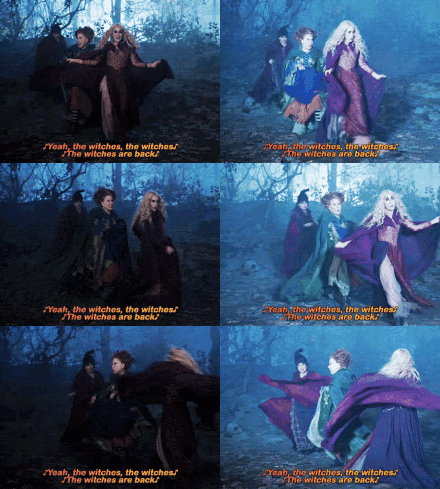
But then, it started to fall flat. Specifically with the scene when the Sanderson sisters return to the 21st century. The movie became too self-aware when the sisters immediately launched into a song and dance routine, like they did during the iconic “I Put a Spell on You” scene. Izzy asked, “Who are they performing for?” and then got startled when one of the sisters appeared shouting, “You!” (the way you’d expect a ghost to pop out and shout “Boo!”). That their performance was acknowledged as weird even within the movie’s universe made it harder for me to appreciate the gag. I worried the entire film was going to rely on references to the original.

After the credits started rolling, I turned it off, and that was that. I didn’t hate it, but I didn’t love it the way I had hoped. To be honest, I wasn’t even sure I liked it. I just felt a vague disappointment.

To be fair, there were forces at work that would be challenging for a filmmaker to overcome. The first being nostalgia—it’s hard to compete with a long-rooted, beloved piece of media from childhood. A film written in the 2020s isn’t going to be the same as its predecessor written in the 1990s, no matter how much it tries to honor its source material. It’s going to resonate on a different frequency. As it should—it’s a family movie geared heavily toward kids today. It needs to be relatable to them, and current youths are going to relate differently to media than my peers when we were their age. Moreover, as an adult, it’s hard to fall in love with a children’s movie with the same devotion I had in childhood. I’m viewing the story through a different lens now. I’m not internalizing it and imagining myself as part of it like I did back then.

But lately I started to ask myself: Was Hocus Pocus 2 really as disappointing as I remembered it? I never rewatched it after that first screening. So three years later, I decided to give it another try—and I discovered my initial reaction might have been too hasty. It’s still no match for the original, but I found a pretty even list of good and bad in the new version.

What didn’t work for me [SPOILERS AHEAD]:

  • The Sanderson sisters breaking out in song with “The Witches Are Back” when they return to Salem. (They perform the song in the credits, too—this was the better fit for it.)
  • The conclusion: The first time I saw it, I didn’t like Winifred’s vulnerability, sudden praises for her sisters, and begging for help from Becca, because all of that seemed out of character for her. Upon rewatching, I do think it’s in character for her to praise her sisters as long as they aren’t around to hear it, but I still don’t like that she lost all of her bite in the end. I would’ve rather had her DEMAND that Becca help her.
  • Winifred’s saccharine goodbye to Becca, Izzy, and Cassie when she said, “Thank thee, and how lucky art thou to have each other.” Can’t our wicked witches remain wicked?
  • The background of every scene in the forbidden woods. What was with the ridiculously huge moon in the background that never moved, no matter how many hours had passed? That’s the only setting in the film that felt low-budget and unfinished, hovering in an odd limbo between what we’d see in a stage play and a network TV episode.

What worked for me:

  • The entire opening scene of teenage Sanderson sisters in 1600s Salem
  • Some of the references and themes from the 1993 movie: I’m a big fan of the “17th century women encounter the 21st century” gags, like using automatic doors at Walgreens. And I laughed at their updated modes of transportation—Winifred had a broom in both movies, but Sarah upgraded from mop to Swiffer Wet Jet, and Mary upgraded from a vacuum cleaner to Roombas. Then there was the small bit where they get freaked out by an Alexa.
  • I love Book, and I especially love that Book has more character and personality
  • The Sanderson sisters costume contest scene: This is the perfect nod to the “I Put a Spell On You” scene in the 1993 version. It’s a fun routine and fits better into the narrative of the story. I think “The Witches Are Back” at the beginning of the movie stole a little of this scene’s thunder, but it’s still fun, and I enjoyed the choreographed horde of enchanted people marching to find the mayor.
  • The theme of sisterhood among friends and about finding power in each other.
  • BONUS: The moment when Gilbert is talking about a virgin lighting the Black Flame Candle and a little kid in the crowd asks, “What’s a virgin?” made me laugh. I have to believe Disney inserted that because so many little kids probably asked the same question of their parents after the first Hocus Pocus. (Watching it with my older sisters at seven years old, I asked them the same question, and they said, “Go ask mom.”)

All in all, I enjoyed it on the second viewing. And I’ll probably watch it again someday.

(Just not as much as I watched Hocus Pocus as a kid.)

Posted in Writing | Tagged , , , , , | Leave a comment

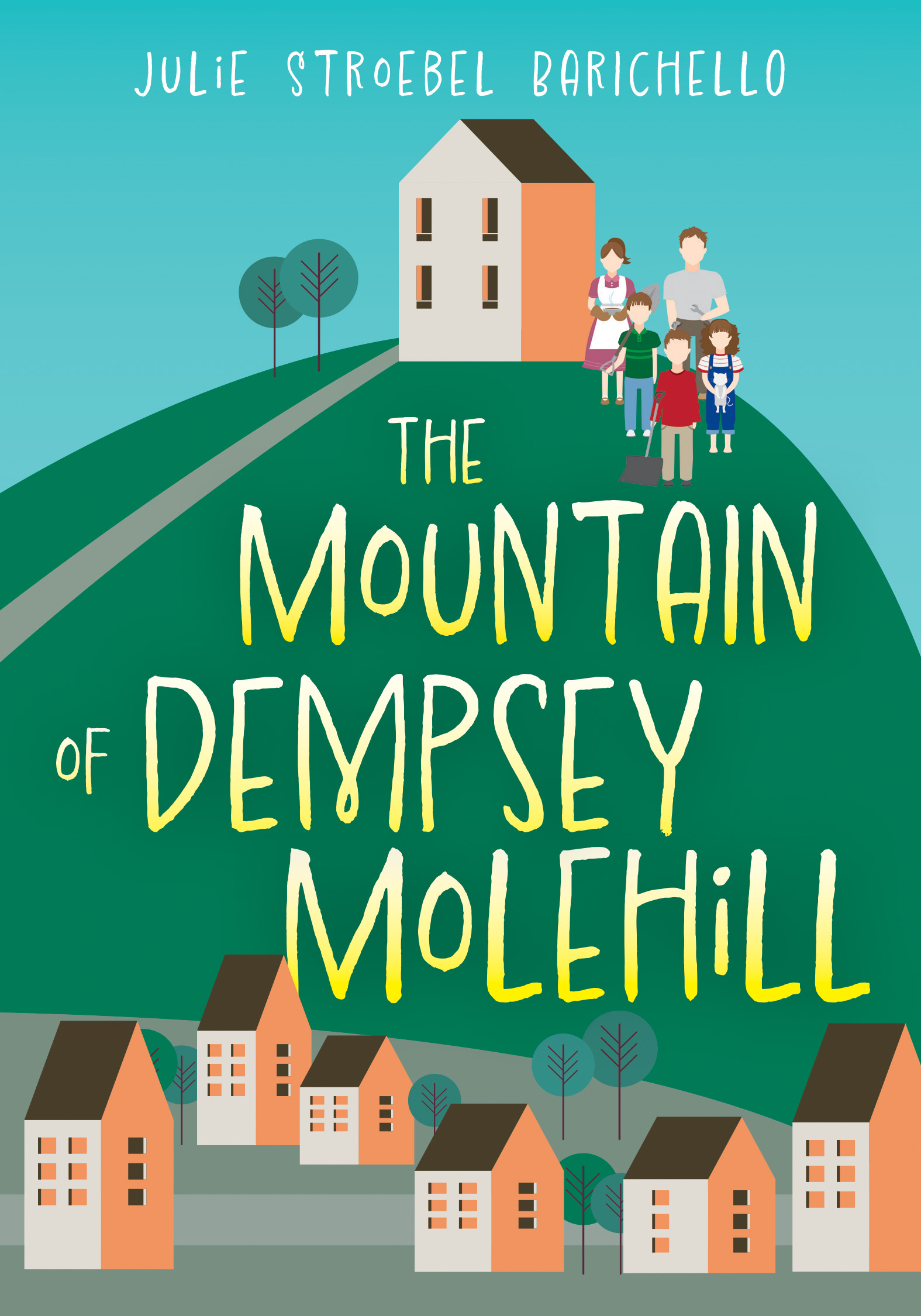
Book Giveaway! Request an ARC of The Mountain of Dempsey Molehill

We’re a little over three months away from the release of The Mountain of Dempsey Molehill. That means it’s time to give away advanced reader copies!

I’m distributing free digital ARCs (available in epub or PDF) in exchange for honest reviews before the book’s Tuesday, Nov. 4, release. To request a copy, fill out the form linked here.

Molehill starts with M. Mischief starts with Molehills.
Dempsey Molehill and his siblings—practically-a-grownup Brom, responsible Tilly, pesky little brother Penn, and wild child Bandi—don’t mean to cause mischief. But somehow, they always find themselves smack dab in the middle of it. When Dempsey’s dad decides to run for mayor of Pickettstown, the five Molehill kids try to be on their best behavior. Unfortunately for Dempsey and his siblings, their “best behavior” includes luring bullies in muddy mayhem, casting Halloween curses, exploding appliances, and terrorizing classmates with Scrap the one-eared cat. Will their antics cost their dad the election? Or can the family band together to put the best Molehill foot forward? The Mountain of Dempsey Molehill is a humorous middle grade novel about life in rural Illinois, small-town politics, and growing up in a big, rowdy family.

Posted in children's literature | Tagged , , , , , | 1 Comment

It’s finally happening! New book coming in November

Ten years.

That’s how long it’s been since Sarah & Katy and the Book of Blank was published. It was my sophomore children’s book, independently published in November 2015.

Riding the high of a recently released novel, I immediately started writing The Mountain of Dempsey Molehill. Optimism launched the unrealistic expectation that I would finish the draft in 2016.

Reality started to set in when 2016 whooshed by. No big deal, I told myself. I’ll finish it in 2017.

Another year whooshed by. In 2018, I had a full draft that had gone through one or two revisions (the revisions have all blurred together in my memory). I almost flipped the switch on independently publishing Dempsey that year, but at the last minute I backed away because the book still didn’t feel quite right. Rewrites continued through 2018 and 2019.

By 2020, I shoved Dempsey in a drawer and started working on a book for older readers about a coven of witches. But Dempsey Molehill’s story about himself and his unintentionally mischievous siblings nagged at the back of my mind.

Over the next five years, I frequently pulled it out, dabbled, edited, revisted, rewrote, restructured. I handed chapters to other writers and asked for their input. I rewrote Dempsey’s mom into a softer character after people told me she seemed militant and unlikeable. At one point, I switched from third person POV to first person. I changed a character’s name. In 2024, I rewrote each chapter, one by one, to adjust the tone of Dempsey’s voice. I added excerpts from the fictional town’s newspaper between chapters. I cut two chapters completely (which was painful but necessary). I cut a third chapter, then put it back in.

And now, finally, ten long years later, the story is complete. It’s ready. It finally feels right.

The Mountain of Dempsey Molehill has entered the production phase. Mark your calendars for Tuesday, November 4, when it will be available for sale!

The Mountain of Dempsey Molehill

Middle grade fiction, Stroebel Independent Books, November 2025

Dempsey Molehill and his siblings—practically-a-grownup Brom, responsible Tilly, pesky little brother Penn, and wild child Bandi—don’t mean to cause mischief. But somehow, they always find themselves smack dab in the middle of it. When Dempsey’s dad decides to run for mayor of Pickettstown, the five Molehill kids try to be on their best behavior. Unfortunately for Dempsey and his siblings, their “best behavior” includes luring bullies in muddy mayhem, casting Halloween curses, exploding appliances, and terrorizing classmates with Scrap the one-eared cat. Will their antics cost their dad the election? Or can the family band together to put the best Molehill foot forward? The Mountain of Dempsey Molehill is a humorous middle grade novel about life in rural Illinois, small-town politics, and growing up in a big, rowdy family.

Posted in Writing | Tagged , , , , , , , | Leave a comment

The time it takes to write a book

Image of an alarm clock against a pink and blue background

In January, I participated in a virtual visit with a third-grade class.

It’s the first classroom visit I’ve conducted in a few years. I originally wrote the Sarah & Katy books for my nieces back in 2014, when Sarah was in third grade and Katy was in first grade. As they’ve advanced to new reading levels and genres, I’ve slowly drifted away from working on children’s books. But occasionally, I still have a teacher or librarian reach out about visiting with students, and it reminds me why I love writing for that age group.

During my recent school visit, I discussed the writing process. To give the students a chance to engage, I let them guess how long it took to write each Sarah & Katy book. Guesses ranged from weeks to years. One student raised a hand and speculated, “Ten years?”

Each Sarah & Katy book took about eight months, but the student’s guess about ten years lingered in my mind after I said my farewells to the class. Ten years is almost how long The Mountain of Dempsey Molehill has taken to write.

The first draft of Dempsey’s story came together between 2016 and 2018. Since then, I’ve lost count of how many times I’ve rewritten the book, shelved it, and then dusted it off for more rewrites. In mid 2024, I retrieved the manuscript after another hiatus. At that point, I told myself I would edit and finalize one chapter per week, with an April 2025 release in mind.

That schedule has already been revised and pushed back — probably late summer at the earliest — but the prolonged project got me thinking: how long does it take other writers to write a book?

I took heart when I stumbled across a September 2018 guest post on Jane Friedman’s website. Refuge author Merilyn Simonds recounted an experience that somewhat parallels my own. She wrote Refuge in four years, then her agent shopped it to editors. The book faced multiple rejections, and eventually Simonds filed it away. But with some discussion and a fresh perspective, she returned to the manuscript several years later to rework it. After another three years and her twenty-second draft, an editor bought the book.

When someone in the audience asks, how long did it take you to write this book, I say, “Fourteen years.” But of course that’s not true. I wasn’t writing during all those fourteen years: I worked on the manuscript in bursts, the pages languishing for months and sometimes years while I gathered my thoughts for the next revision. – Merilyn Simonds

Simonds also noted how long other authors have taken to write some of the world’s best-known works. Some writers are able to churn out manuscripts quickly — John Boyne cranked out The Boy in the Striped Pajamas in less than three days — while others set a slower pace — Margaret Mitchell spent ten years on Gone With the Wind. My husband, ever the trivia enthusiast, told me Kurt Vonnegut spent 23 years writing Slaughterhouse Five, sometimes throwing out entire drafts to restart the project. (There’s a great article in TIME about his multiple drafts.)

For independent authors especially, it’s a good lesson to take to heart: the time it takes to write a book is the time it takes, and there’s no need to rush publication. In traditional publishing, there are teams of agents and editors to flag that a manuscript that isn’t quite ready. For indie authors, it can come down to our own discretion when we flip the switch on publication. I almost published Dempsey’s story too early.

In August 2018, after a couple of minor rewrites and edits, I had a draft of Dempsey that I decided to publish. I was eager to share the story and started the process of registering my new publishing imprint, buying ISBNs through Bowker, setting up metadata in Bowker and IngramSpark …

But something about the story still felt off. I couldn’t bring myself to release it into the world quite yet, and I’m glad I didn’t. Each revision since then has strengthened and honed the story. The latest iteration is stronger in its voice, trims away excess that slowed the plot, and tightens a few loose ends.

This marks Year 9 of working on Dempsey’s story. The book will be a long time in coming, but I’m in good company among fellow writers who have taken time to let a story evolve into its best final form.

Posted in Writing | Tagged , , | Leave a comment

The gunpowder dilemma: Telling a good story without setting a bad example

When the original Home Alone film was released in 1990, one of my friends wasn’t allowed to watch it.

On its surface, the movie is just a family comedy. Unruly eight-year-old Kevin McCallister accidentally gets left home alone for a week when his family travels to Paris, and he gets into increasingly wild mischief as he booby traps his house to protect it from robbers.

My friend’s mom saw it through a different lens. It was a how-to manual for her own mischief-making son. She was especially worried about the scene where Kevin rides his sled down the stairs and out the front door, because their home had a similar configuration, and it wouldn’t be out of character for her son to try the same.

For an adult audience, Home Alone is a classic movie with slapstick violence. For younger viewers, it might be a funny film – or it might be an idea generator for copycat antics. 

Creating a mischief-packed scenario in children’s media – be it film, television, literature, music, etc. – requires creators to walk a fine line. We want it to be entertaining. We want it to be believable. We want the stakes to be high. But we don’t want to have to add a big, red warning label that says, “Kids, don’t try this at home.”

In writing The Mountain of Dempsey Molehill, I’ve found myself walking a wobbly tightrope in a few chapters as I try to balance humorous mischief with authenticity – and without giving young, impressionable readers any bad ideas. The premise of the middle grade novel is five siblings with a penchant for mischief try to be on their best behavior the year their dad runs for mayor. Unfortunately, wherever the Molehill kids go, mischief is sure to follow. 

One chapter in particular raised red flags for beta readers and has gone through multiple revisions. Seventh-grader Dempsey and his best friend Cooper are cleaning the garage when they find a moldy old encyclopedia that includes the chemistry for gunpowder. They decide to make their own (it’s surprisingly easy to make a basic form – it takes three ingredients, all of which can be found in the average garden shed), and their experiment causes a small fire. 

A challenge I faced was writing the chapter with enough detail that it feels authentic without turning it into a how-to guide on homemade gunpowder. The first draft included the three ingredients by name; it didn’t take long for a nagging voice in my head to say, “Maybe that’s not such a great detail to include…” My most recent draft is less specific on those details.

What’s also important is the character’s intent. A growing criticism I’ve seen about Home Alone is that some viewers believe Kevin is a psychopath who derives thrill from creating chaos and pain. Rather than seeing slapstick humor in the robbers suffering blowtorches on their scalps and nails in their feet, the audience sees a remorseless child inflicting serious injury.

That’s not the message I want to send with Dempsey and Cooper and their gunpowder experiment.

In early drafts of the manuscript, science-loving Dempsey knew from the start what they were creating. One beta reader asked, “But why? What would be the point of them making it when they know there’s nothing they can do with it?” 

That was a good point. Knowingly making gunpowder is just asking for trouble.

In the latest revision, when the boys find the water-damaged encyclopedia, part of the page is too damaged to read – including the “gunpowder” label at the beginning of the encyclopedia article – but the chart for the gunpowder formula is intact. Intrigued, they try to guess what it is, which leads them to test the recipe to see if they can deduce its purpose. It’s a mix of simple curiosity and dumb luck that they find the three ingredients in the garage and successfully create a basic black powder.

Revisions are still in progress for the latest version of the book, but fortunately the gunpowder chapter is moving in a better direction. The Molehill kids might not necessarily set a good example, but ultimately I hope they don’t set a bad example.

Posted in Writing | Tagged , , | 2 Comments